
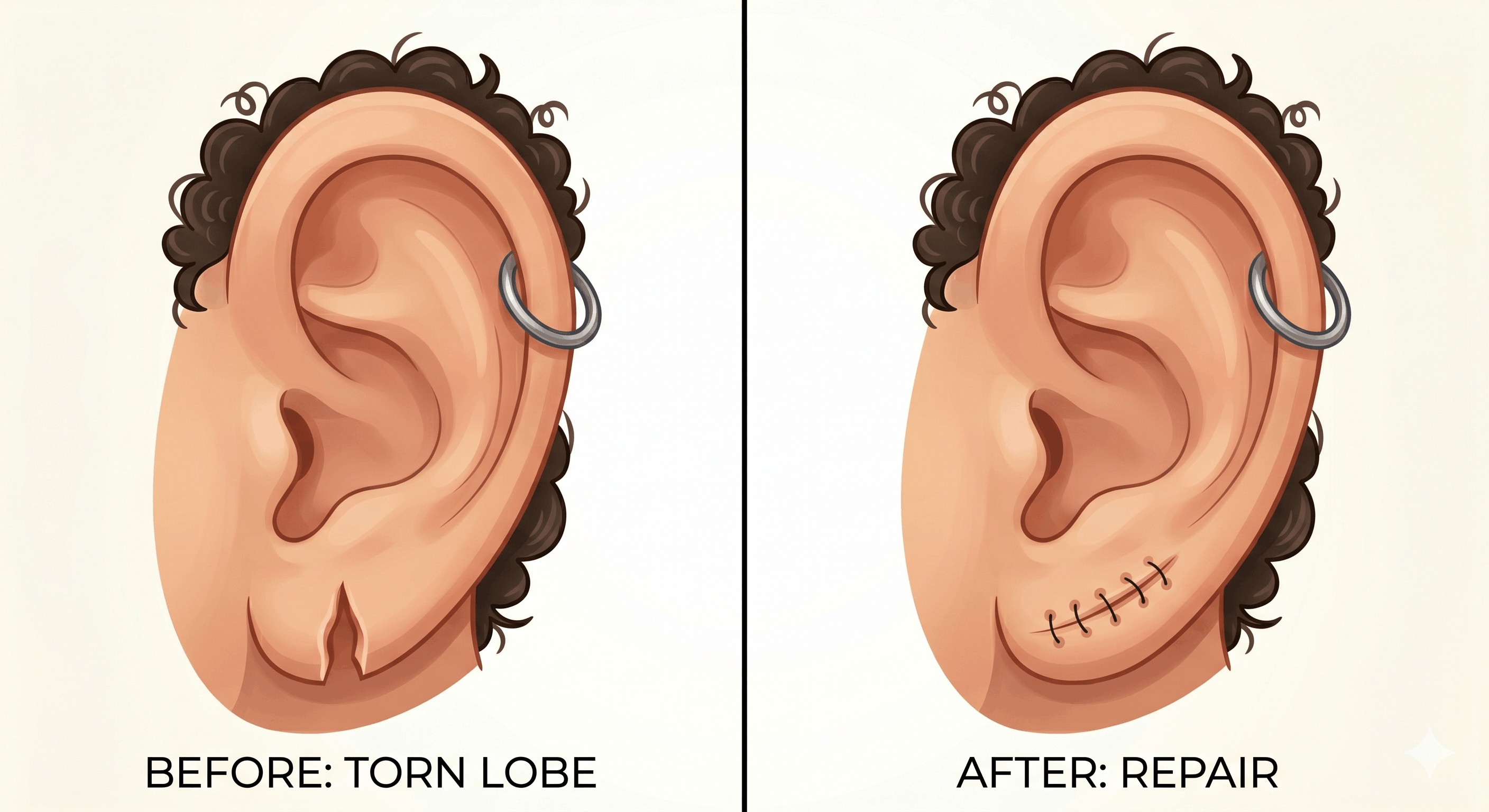
If you have recently got your ears pierced — or are planning to — one of the first questions that comes to mind is: how long does an earlobe piercing take to heal completely? Whether you are in Navi Mumbai, Panvel, or Thane, this is one of the most commonly asked questions at piercing studios and skin clinics. The answer depends on several factors, including your skin type, aftercare routine, and the quality of jewellery you choose.
In this guide, we break down the complete earlobe piercing healing timeline, what to expect at each stage, and how to ensure a smooth, infection-free recovery — right here in your city.
The short answer is that earlobe piercing healing time is typically 6 to 8 weeks for the initial stage. However, complete healing — where the piercing channel is fully formed and stable — can take anywhere from 3 to 6 months.
Many people in Navi Mumbai, Panvel, and Thane make the common mistake of assuming the piercing is fully healed once it stops hurting. This is a myth. The outer skin may close quickly, but the inner tissue of the earlobe needs significantly more time to mature and stabilise.
Understanding this timeline is key to avoiding infections, scarring, and complications that bring many patients to our clinic.
Right after piercing, your body treats the wound as a minor injury and begins its natural defence process. During this stage, you may notice:
This is your immune system doing its job. Do not panic. This is the most critical period for earlobe piercing aftercare. Keep the area clean, avoid touching it with unwashed hands, and do not rotate the earring unnecessarily — a practice that many people still follow out of habit, but which actually causes more irritation and delays healing.
During this phase, new skin cells begin lining the piercing channel. The redness and swelling typically reduce significantly. You may still notice:
This is when many people mistakenly stop their aftercare routine. Do not stop cleaning the piercing just because it feels better. The piercing channel is still forming and remains vulnerable to infection and irritation during this phase.
This is the final and longest phase of earlobe piercing recovery. The skin channel gradually hardens and fully matures. By the end of this phase:
Only after this phase is complete can you truly say your piercing has healed.
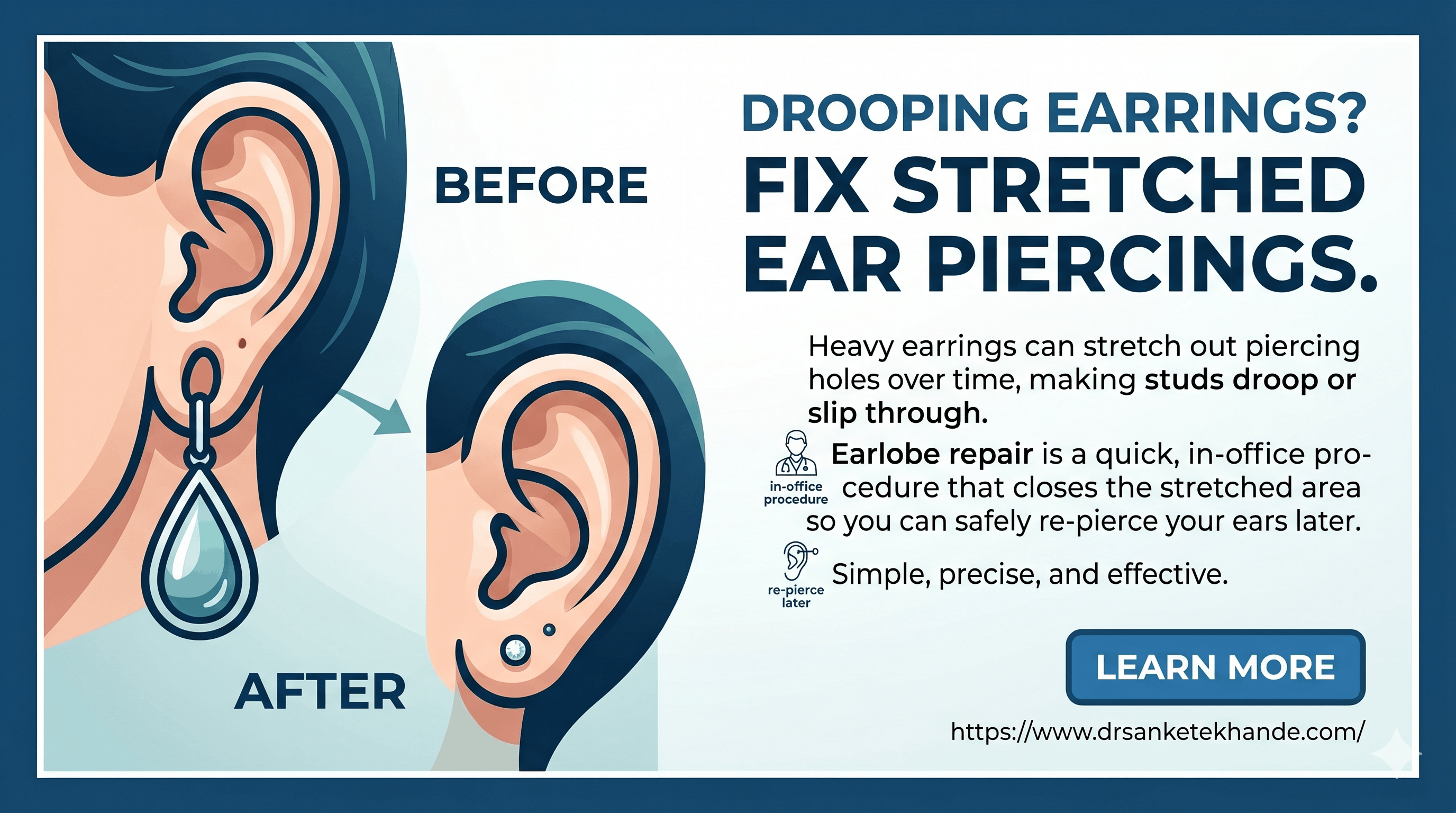
Several factors influence how quickly or slowly your earlobe heals. These are especially relevant for those living in the warm, humid climate of Navi Mumbai, Panvel, and Thane:
Safe earring materials for new piercings include implant-grade titanium, surgical-grade steel, solid gold (14k or above), and niobium. Jewellery purchased from unverified sources often contains nickel or low-grade alloys that can trigger earlobe metal allergies, delayed healing, and persistent irritation. Always buy from certified jewellers or clinics.
A proper earlobe piercing care routine using sterile saline solution (0.9% sodium chloride) twice daily is the gold standard recommended by dermatologists. Avoid antiseptic solutions not prescribed by your doctor, as these can kill healthy skin cells and significantly slow the healing process.
People with sensitive skin or conditions like eczema may experience a longer healing journey. Those with a tendency to form keloids on earlobes — more common in individuals with darker skin tones — should consult a dermatologist before getting pierced. A quick pre-piercing consultation at a plastic surgeon clinic in Navi Mumbai, Panvel, or Thanecan help identify your risk and prepare accordingly.
A professional needle piercing heals significantly faster than a gun piercing. Piercing guns cause greater tissue trauma and are not recommended by medical professionals. If you are looking for safe ear piercing in Navi Mumbai, a piercing studio in Panvel, or a skin clinic in Thane, always opt for a trained professional using a sterile needle technique.
Sleeping directly on the piercing, swimming in public pools, using hair products near the ear, or changing earrings too early — all of these delay healing considerably. Small adjustments to your daily routine can make a significant difference in your recovery time.
Knowing the early signs of an infected earlobe piercing can help prevent serious complications. Watch out for:
If you notice any of these symptoms, visit a dermatologist or skin specialist promptly. There are trusted clinics and ENT specialists across Navi Mumbai, Panvel, and Thane who can quickly and safely evaluate and treat piercing complications.
Top Aftercare Tips for Faster Earlobe Piercing Healing
Here are the best practices recommended by skin specialists for faster earlobe piercing healing:
When to See a Doctor in Navi Mumbai, Panvel, or Thane
If your piercing is not healing within the expected timeframe or you suspect an infection, do not rely solely on home remedies. Seek professional advice from a Docter. Early professional treatment prevents minor irritations from becoming serious complications such as deep tissue infection, abscess formation, or permanent scarring.
A specialist can also advise on keloid prevention, recommend clinically approved aftercare products, and guide you on the safest jewellery options for your specific skin type.
Frequently Asked Questions (FAQs)
Q1. Can I change my earrings after 6 weeks?
Six weeks mark the end of the initial healing phase, but the piercing is not fully healed. It is strongly recommended to wait at least 3 months before changing earrings to avoid irritation or tearing the healing channel.
Q2. Is it normal for my earlobe piercing to still be crusty after a month?
Yes, mild crusting can persist for up to 6–8 weeks. This is dried lymph fluid and is a normal part of healing. If the crust is accompanied by yellow or green discharge and pain, it may indicate infection — see a doctor.
Q3. Why is my earlobe piercing taking so long to heal?
Common reasons include using the wrong jewellery material, improper aftercare, touching the piercing frequently, sleeping on it, or an underlying skin condition. A dermatologist can identify the cause and suggest the right treatment.
Q4. Does earlobe piercing healing faster for children than adults?
Children generally have faster skin cell regeneration, but their piercing healing timeline is similar to adults — 6 to 8 weeks for initial healing and up to 6 months for full maturity. Proper aftercare is equally important for children.
Q5. Where can I get safe earlobe piercing treatment in Navi Mumbai, Panvel, or Thane?
For safe, medically supervised earlobe piercing treatment in Navi Mumbai, you can visit Dr Sanket Ekhande at Unique Aesthetic Clinic, located in Vashi, Navi Mumbai.
Dr. Sanket Ekhande is a qualified Plastic Surgeon specialising in ear reconstruction, ear reshaping, and a full range of ear-related surgical and non-surgical procedures.
Final Thoughts
To summarise: earlobe piercing healing time is 6–8 weeks for initial healing and up to 6 months for complete healing. The key to a smooth, complication-free recovery lies in choosing quality jewellery, following a consistent aftercare routine, and knowing when to seek professional help.
Whether you are a first-timer getting pierced in Panvel, a teenager in Thane getting a second lobe piercing, or an adult in Navi Mumbai exploring a re-piercing, understanding the healing process empowers you to make safer, smarter decisions for your long-term earlobe health.
Copyright © All Rights Reserved, By Dr. Sanket Ekhande | Sitemap | Privacy Policy
 Call Us
  WhatsApp